

Work With Featured Supabase Expert Agency
Helping teams launching new products, modernising legacy systems, and scaling existing platforms.

Top 4 Feature Supabase Experts
4.9 Client Satisfaction Score on Clutch

100+ Projects Completed

Supabase Services

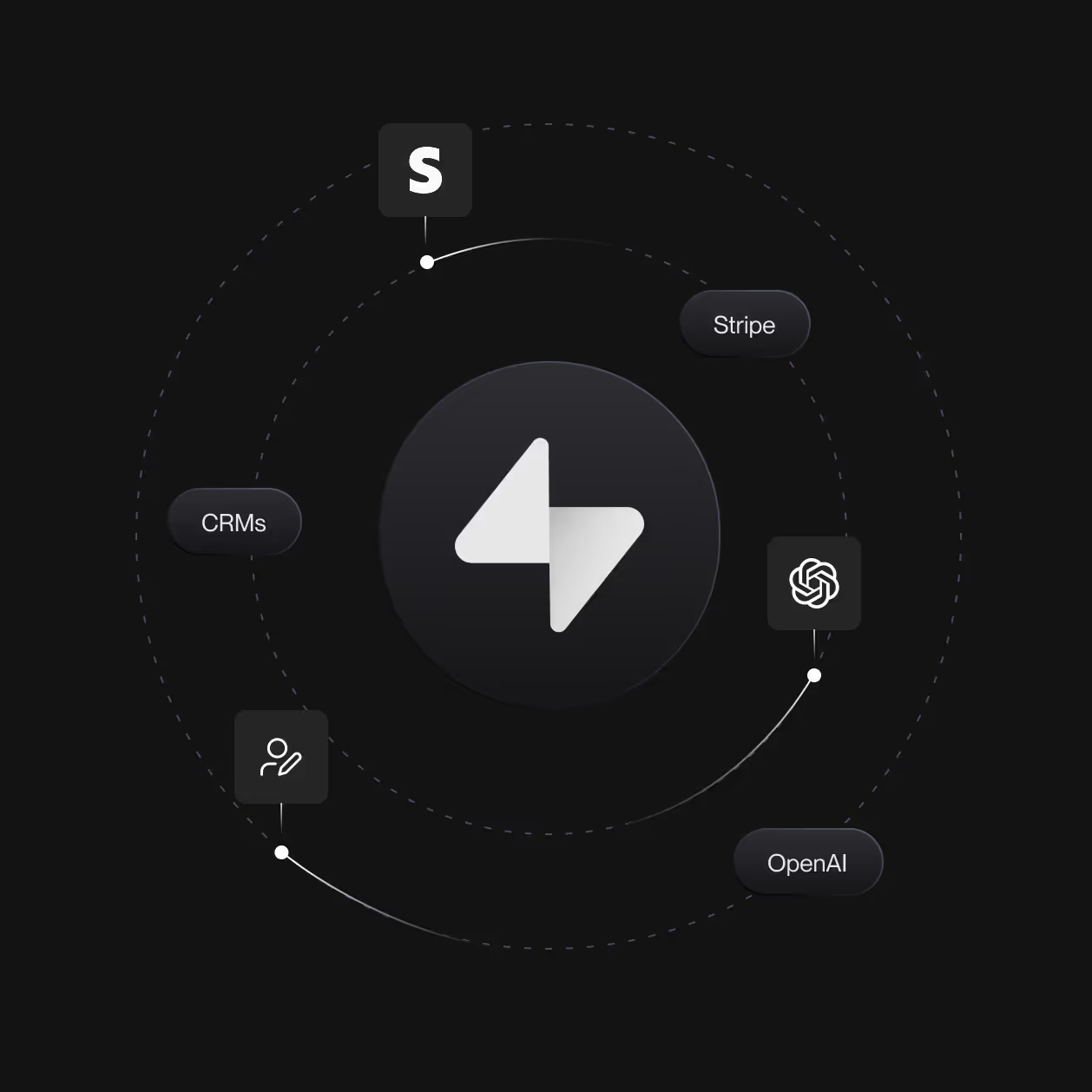





Migration to Supabase
Move from Firebase, custom backends, or legacy infrastructure to a modern Supabase stack.
Integrations
Connect Supabase with the tools your business already relies on.
Backend Architecture
Designing scalable, secure backends for any digital product.
Database Design & Optimization
Structuring data for performance, scalability, and real-time use cases.
Security Audit
We audit your Supabase implementation for real-world risks.
Real-Time Features
Live updates, chat, collaboration tools, and syncing across devices.
Scale Existing Project
Remove bottlenecks before they become business problems.
Stop worrying about infrastructure. We build high-performance, secure backends using Supabase so you can focus entirely on your users and growth.
Stop worrying about infrastructure. We build high-performance, secure backends using Supabase so you can focus entirely on your users and growth.
BOOK A CALLMigrate from anywhere.
Integrate anything.
Bring your existing data and infrastructure to Supabase. Integrate the services your business already relies on.













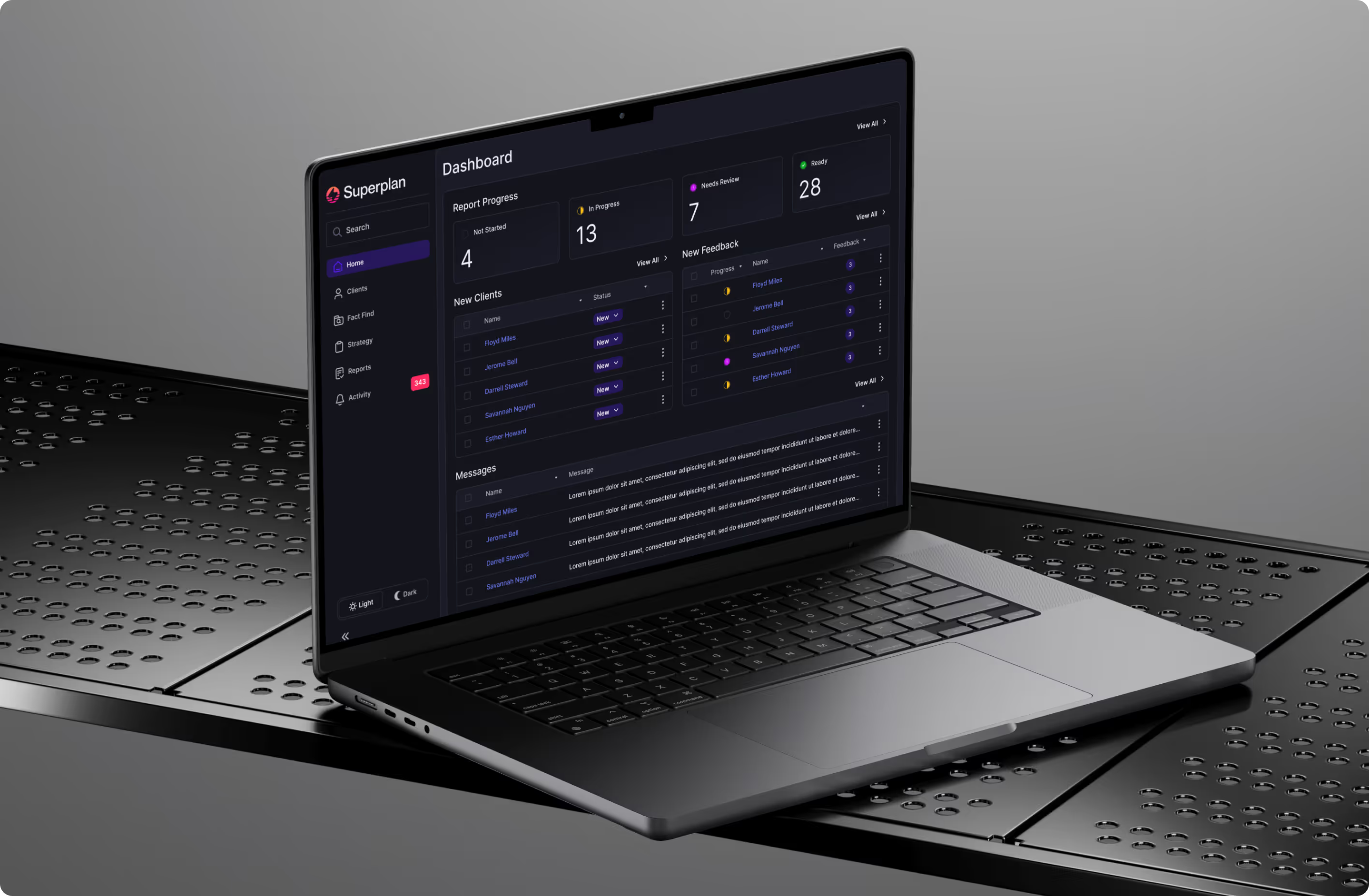
Superplan
Smarter tool for financial planning.
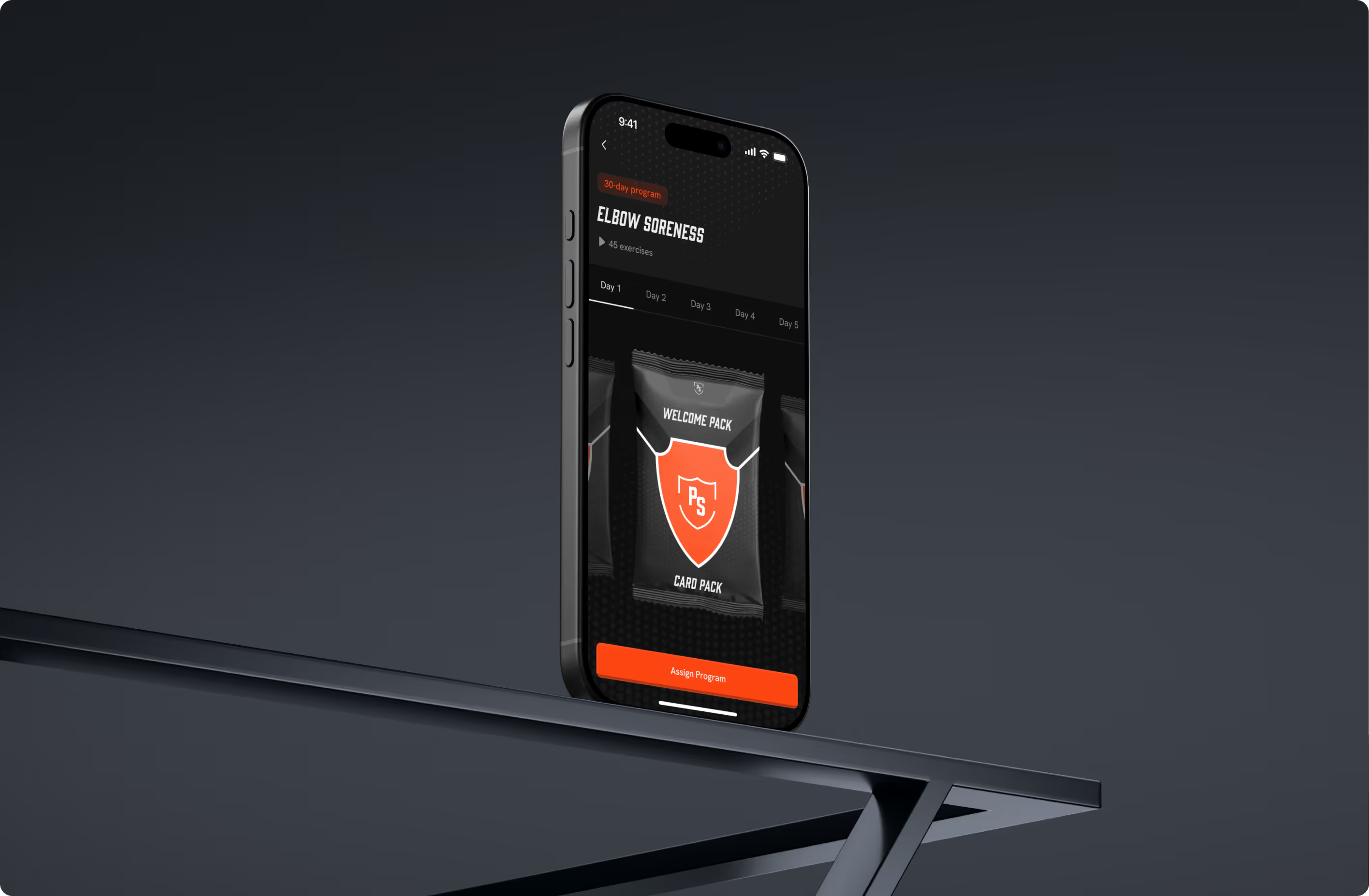
PitchSafe
Track performance. Train smarter.
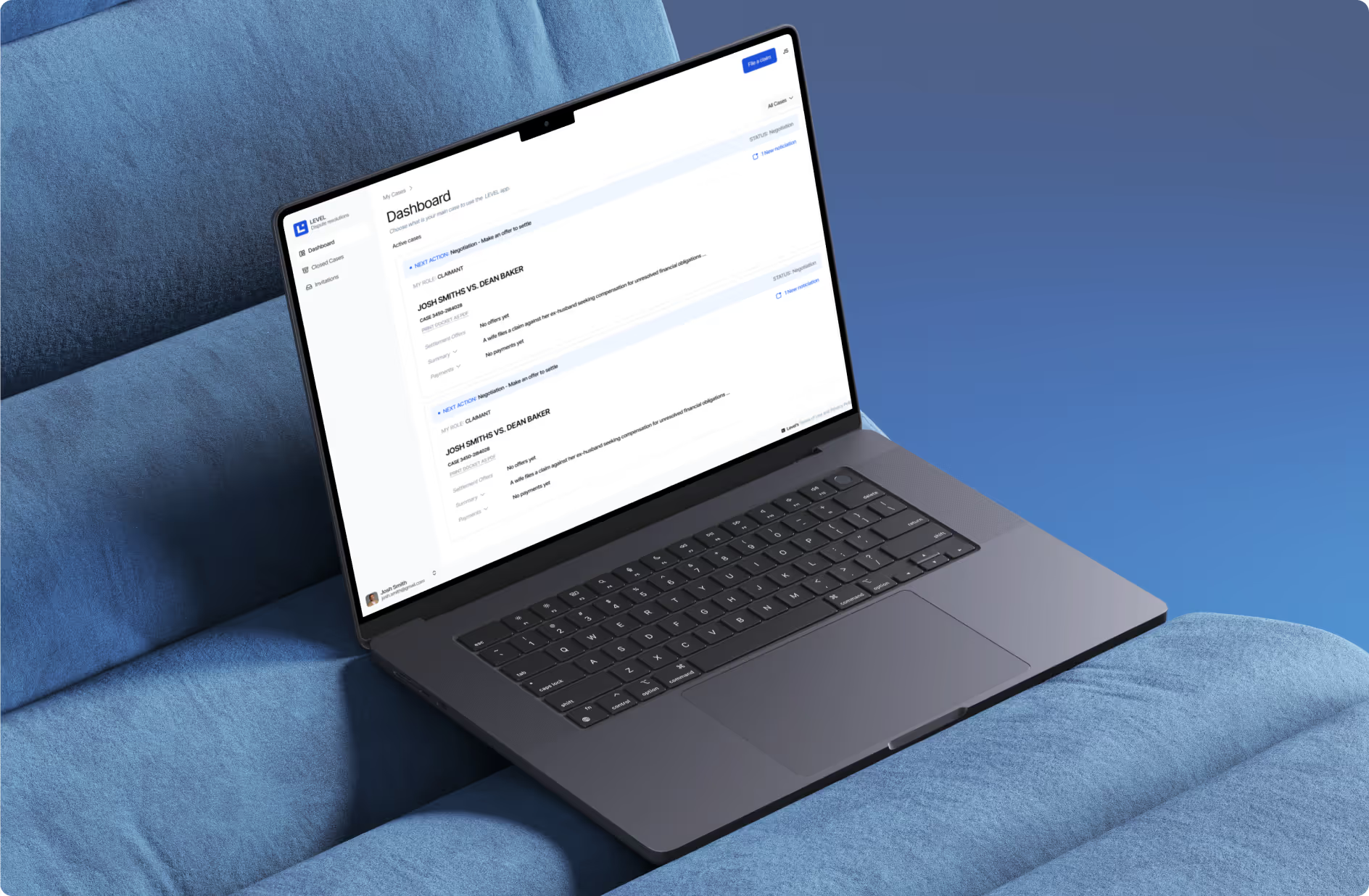
Level
Turning legal chaos into clarity.
Recap
Share moments that matter.

Analog
Achieve long-term objectives.

Building products that don’t just launch — they perform, grow, and deliver results
100+
Supabase Projects Completed
TOP 4
Supabase Featured Experts
$20M+ ARR
Supabase Migrations for $20M+ ARR Businesses
4.9
Calda’s Clutch Rating
Why work with us?
We act as an extension of your team, supporting your product with ongoing development, improvements, and growth.
Want to view more?
See All ProjectsSupabase Experts
Your Team.
Certificates & Awards
Expertise proven through years of dedication to the craft.
PARTNER






Phillip Shepard
Owner, All Things NWA
They want their projects to be amazing, on budget, and on time.


Eric Druckenmiller
Founder & CEO, Knight & Knave
Their dedication to quality and attention to detail make them stand out.


Joshua Rex
Co-Founder, CRW
They understood our vision and made a significant contribution to refining our concept.


Kimberley Puchois
CEO, MuseMuse.app
They worked very fast and were very responsive to any changes needed.


Dori Dagher
President, Atomes Bio
Their collaborative culture and emphasis on continuous improvement fostered a dynamic and motivating environment.


Matt Tabor
Founder & CEO, Pitchsafe
If you’re building an app, work with Calda. As a first-time app founder, I felt supported the whole way. The thing I appreciated the most was how they mapped the whole process for me and really translated my vision into a beautiful app.


Jose Supico
Founder & CEO, Superplan
Calda doesn't wait for perfect specs; they get stuck in, figure things out, and keep moving.


Carl Swanson
CEO, Analog Labs LLC
Calda's design and technical quality are equally strong. The team is incredibly responsive and has delivered according to the agreed-upon milestones.


Matej Ivanetic
Founder & CEO, Recap
They care about our product and suggest ideas that I didn't even ask for, and that helps a lot!


Chris Putsch
Founder & CEO, Subseven
Calda has built what we wanted. They always hit deadlines and deliver high-quality goods.

%201.svg)
Andrew Oehler
Co-Founder, Superdex
Calda did a great job and fully met our expectations throughout the project.


Akal Sahai Khalsa
CEO & Founder, BrightStar Live Events, LLC
Their responsiveness, problem-solving mindset, and ability to adapt to evolving requirements set them apart.
We use Supabase to build secure backends for mobile apps, web applications, SaaS platforms, marketplaces, portals, and internal business tools. Our projects range from startup MVPs to complex production systems with multiple organizations, user roles, subscriptions, file storage, real-time data, AI features, and third-party integrations.
Yes. Supabase is built on PostgreSQL and provides the core infrastructure required for production applications, including databases, authentication, file storage, real-time functionality, server-side functions, and APIs. When configured correctly, it can support secure and scalable products ranging from early-stage MVPs to complex business platforms.
Yes. We can review an existing Supabase project, identify technical and security issues, and continue development. Our review can cover database architecture, authentication, Row Level Security policies, Edge Functions, storage permissions, API design, performance, integrations, and technical debt. This includes projects built by another agency, freelancer, internal team, or with AI-assisted development tools.
Yes. You retain ownership of your Supabase project, database, user data, storage, functions, accounts, and related intellectual property. We build within client-controlled environments whenever possible, so you can manage the infrastructure independently or continue working with another development team in the future.
Supabase costs depend on factors such as database size, storage, bandwidth, active users, server-side functions, and overall application usage. Before development begins, we identify the expected Supabase plan and any related third-party infrastructure costs. As the product grows, we can also help monitor usage and optimize the setup to avoid unnecessary expenses.
Yes. We can work as an extension of your internal team or collaborate with existing frontend, backend, mobile, and infrastructure developers. We can take responsibility for the complete Supabase backend or support specific areas such as architecture, security, database design, integrations, performance, or technical review.
We design security at the database and application level rather than relying only on frontend restrictions. This typically includes Row Level Security policies, role-based access controls, secure authentication, protected storage, server-side validation, carefully managed secrets, and restricted API access. For more sensitive applications, we can also implement audit logs, encryption, data-retention rules, and deletion workflows.
Row Level Security controls which database records each user is allowed to access or modify. For example, a user may only be able to view their own profile, while an organization administrator can access records belonging to their organization. Correctly configured policies help prevent unauthorized data access even if someone attempts to bypass the application interface.
Yes. We use Supabase to build applications with multiple user types, organizations, teams, permissions, and access levels. This can include platforms where each company has its own users and data, administrators manage multiple accounts, and different roles have separate viewing or editing permissions. The database structure and security policies are designed around these relationships from the beginning.
Yes. Supabase can connect with payment providers, CRMs, ERPs, analytics tools, AI services, email platforms, external databases, and custom APIs. We can use Edge Functions, webhooks, server-side services, or custom middleware to securely exchange data and automate workflows between Supabase and other systems.
Yes. Supabase can be used with a wide range of frontend technologies. We frequently use it with FlutterFlow, Flutter, React, Next.js, WeWeb, and other web or mobile frameworks. On a Supabase-focused page, Supabase should be presented as the core backend technology, with the frontend selected according to the product’s requirements.
We consider performance during the initial database design rather than waiting until the application becomes slow. This includes appropriate data modeling, indexes, optimized queries, pagination, storage structure, access policies, and server-side logic. We can also monitor query performance and improve the architecture as usage and data volumes increase.
Supabase supports regional hosting, allowing the project to be deployed closer to users or within a required geographic region. Depending on the product, we can also implement data-erasure workflows, audit trails, role-based access, encryption, consent handling, and other technical requirements related to regulations such as GDPR. Formal legal compliance should still be reviewed with the client's legal or compliance advisor.
Supabase is built on PostgreSQL, a widely used open-source database technology. Your data can be exported, the database can be migrated to another PostgreSQL environment, and Supabase also offers self-hosting options. We structure and document the backend so the product is not unnecessarily dependent on Calda or a closed proprietary database system.
