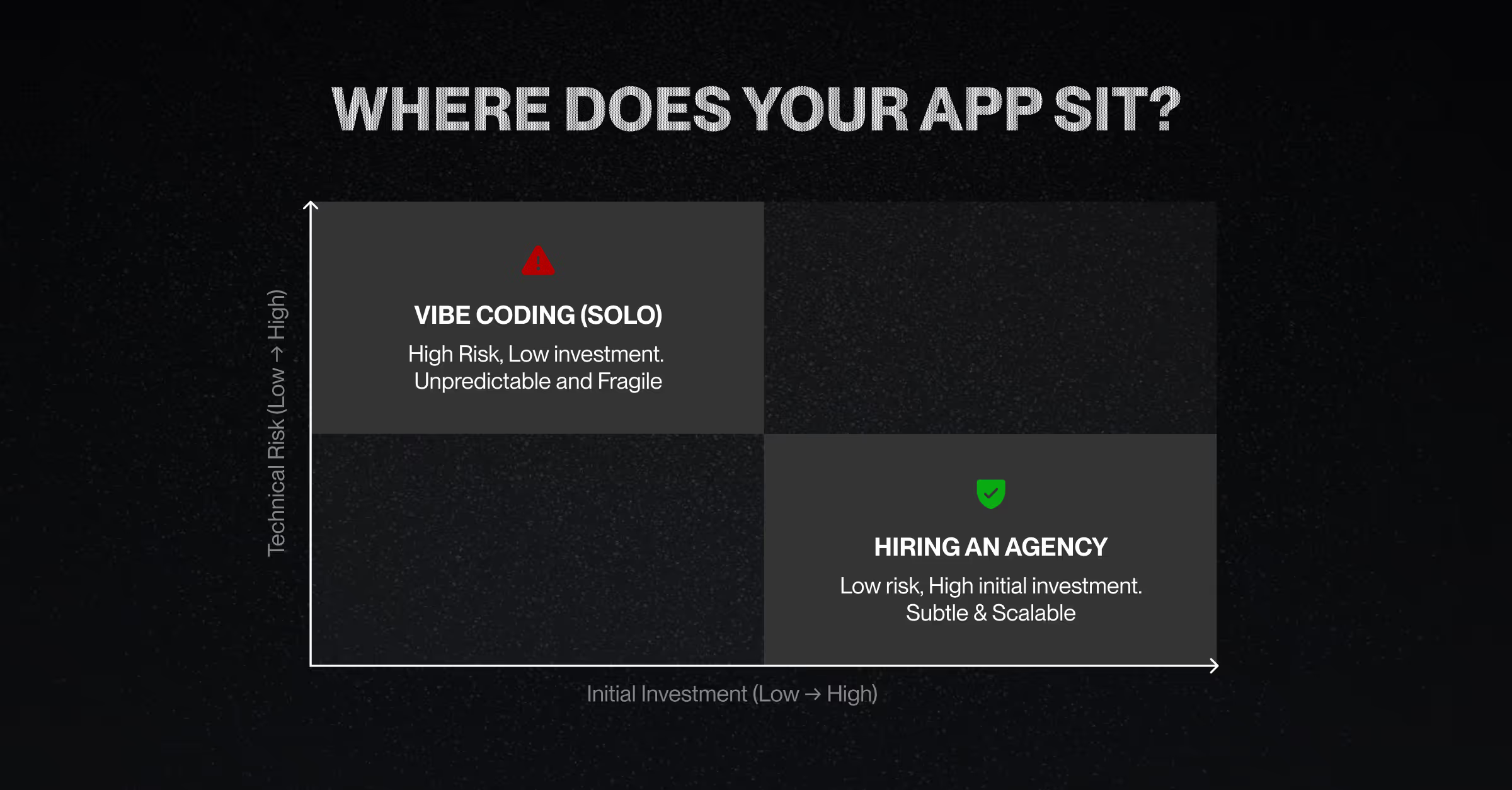
The smarter move between vibe coding and hiring an agency most commonly depends on what you are building and what part of the product lifecycle you are currently in. While the groundbreaking technology of vibe coding allows you to build simple prototypes for a small initial investment, it often comes with hidden risks including security vulnerabilities, generic user experiences, and a lack of scalability that can make it difficult to grow beyond a basic level.
On the other hand, hiring a professional agency requires a higher initial investment but provides a fixed-cost roadmap, a team of specialists, and the security protocols needed to protect your business from catastrophic data loss. While you can technically build an app on your own using natural language prompts, the transition to a truly secure, scalable, and market-ready product often requires a professional engineering team.
So let’s deep dive into what vibe coding actually is, its unpredictable variable costs and risks, the pros and cons of hiring an agency, and how to identify the exact moment one path becomes a smarter strategic decision than the other.
What is Vibe Coding?
Vibe coding is the practice of building software by simply describing your intent in plain English while AI handles the actual development.
Unlike professional development frameworks such as FlutterFlow, which sit on top of industry-standard code, vibe coding is used to develop applications through natural language prompts rather than writing complex code. This means that instead of a developer manually coding a secure database, a user simply sends a request and the AI writes the code itself.
Why is it Good?
The ability to create a functional prototype or a low-level MVP in such a short timeframe is a significant technological breakthrough. For many founders, this is the most efficient way to move from an idea to something tangible. If you are testing a concept, building a small internal tool, or simply trying to see if there is market demand, vibe coding is a practical choice that allows you to gather real-world feedback, without committing heavy resources upfront.
Why is it Bad?
The real concern isn't the AI itself, but the "blind trust" that often follows it. Vibe coding represents a fundamental shift toward AI-first development, where the user often skips reading the underlying code entirely. This lack of oversight creates a significant risk, as it’s impossible to truly "own" or maintain a product you don’t understand. Relying on unverified code means you might not discover critical security gaps or structural flaws until they start impacting your users and your business.
In fact, this approach is moving into the mainstream quickly. Gartner predicts that by 2028, 40% of new enterprise applications will be built using these very techniques. Now while this might sound concerning at first, it is important to note that today, AI is the worst it will ever be. Gartner’s prediction isn't necessarily a warning of a lower-quality future. Instead, it suggests that by 2028, these tools will likely have reached a level of maturity and reliability that we are only beginning to imagine today.
How does Vibe Coding actually work?
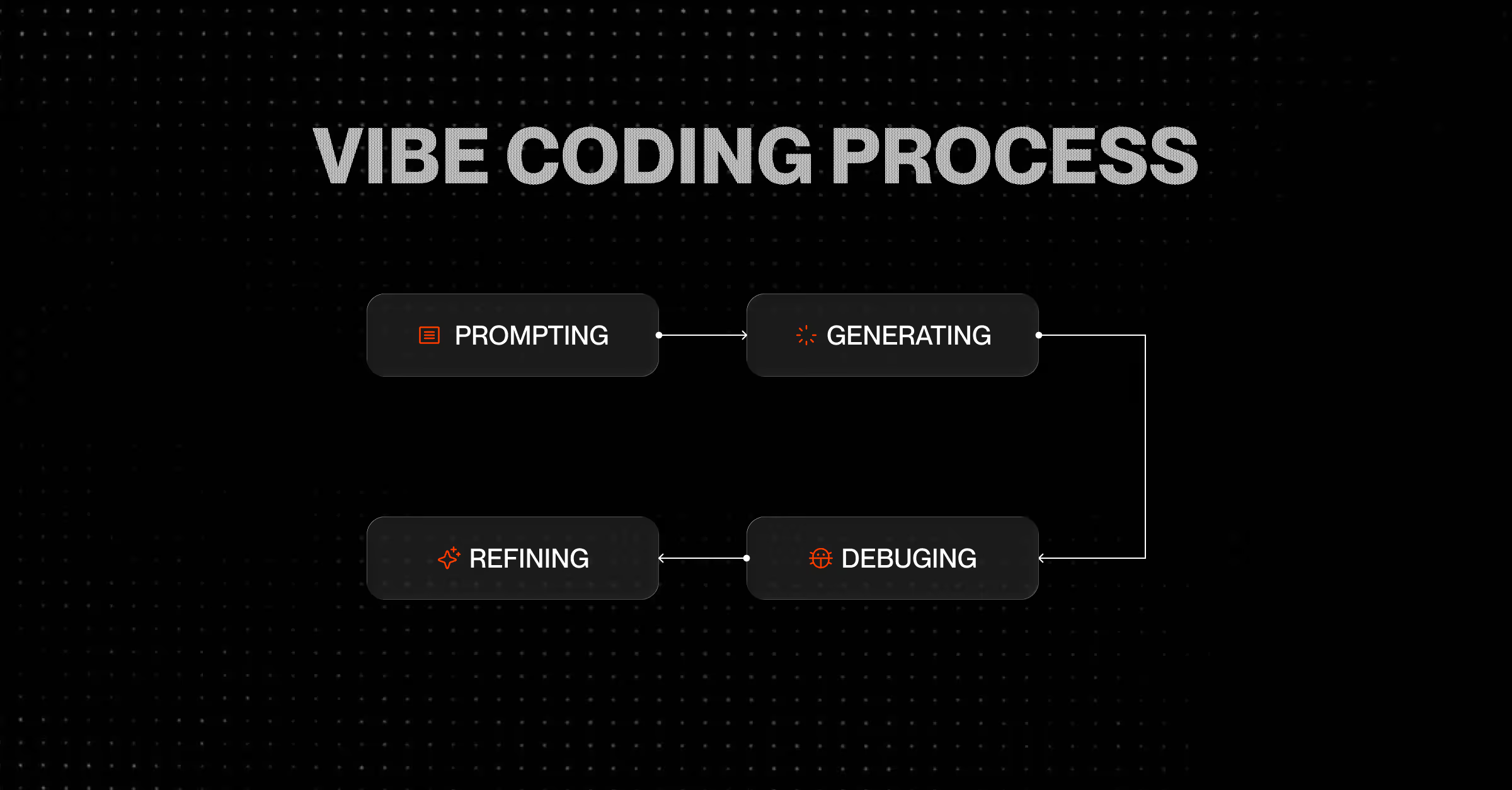
The workflow follows a fast, four-step process:
- Instead of writing technical requirements, you prompt what you want to build in plain English to an AI tool.
- The AI processes your instructions and generates an initial version of the application instantly, which you can then accept without needing to manually review or write the underlying code.
- When technical issues or errors arise, you copy and paste the error back into the AI tool, which analyzes the problem and debugs it.
- You continue asking the AI for UI refinements or workflow changes until the user interface and overall experience align with how you want the app to "feel" and function.
How much does Vibe Coding actually cost?
The biggest financial upside of vibe coding your app is the ability to avoid hiring a professional developer at the very beginning, a move that substantially lowers your initial investment. However, while starting costs are very low, we also have to understand the hidden costs of developing your vibe coded app.
Unlike traditional software with fixed costs, vibe coding introduces several variable costs that can impact your budget.
- Usage and Token Spikes:
Instead of a flat monthly fee, most AI tools use the "usage-based" pricing model.
The way it works is by tracking every single interaction as a specific cost, measured in "credits" (the digital currency you spend every time you ask the AI to generate code, fix a bug, or run a test.)
Once these credits run out, you have to pay again if you wish to continue coding. Since code is much more "dense" than regular text, meaning a few lines of code actually require much more processing power than a simple email, a single request for a complex feature can drain your entire month's worth of credits in just a few hours.
To put that in perspective, some users have been hit with surprise bills of over $350 in a single day just by asking the AI to make small improvements to their project.
- The "Thinking" Tax:
Newer, "reasoning-based" AI models have made the cost of vibe coding even more unpredictable. Instead of just charging you for the length of the answer, platforms are now starting to charge for the amount of effort the AI spends "thinking" before it ever writes a single line of code.
The way it works is by measuring the internal computation the AI performs to solve complex problems. Think of it like hiring a driver. You don't just pay for the miles driven, you pay for the hours they spent studying the map and planning the fastest route through traffic before they even started the engine.
Because these smarter models run multiple hidden queries to ensure accuracy, you might find that a single "deep" answer drains your credits much faster than a "fast" one. For a business, this means your development costs aren't just tied to how much code you have, but to how difficult your ideas are for the AI to process.
- The Debugging Loop:
Even the most advanced AI never delivers a perfect product on the first try, which leads to a hidden financial trap known as the "Debugging Loop."
The way it works is by forcing you into a cycle of trial and error: you ask for a feature, the AI makes a mistake, and you then have to spend more credits to ask it to fix its own error.
Because AI often produces code that looks correct but doesn't actually work, you can easily blow through your entire budget just trying to "untangle" a single bug. According to a 2025 study, 45% of developers reported that debugging AI-generated code actually takes longer than writing it from scratch.
- Post-Coding Costs:
Once you’ve successfully vibe-coded your app, the expenses don’t stop because you still have to power that application so the world can actually use it. This is where you run into Post-Coding Costs, which are the ongoing fees for hosting, databases, and third-party services.
For example, you might pay a small fee for the coding tool but then realize you need to pay another $25 a month for a database like Supabase, plus additional fees for hosting on Vercel or AWS.
Bottom line?
While the variable costs mentioned above can be unpredictable, it is important to recognize that a vibe-coded app remains the most affordable way to launch a prototype.
If your goal is simply to test an idea with a minimal initial investment, this path is undeniably more affordable than a professional build. However, this lower entry price comes with a strategic ceiling. As your project grows, the savings on development are often offset by limited scalability, potential security vulnerabilities, and a higher risk of losing users due to a suboptimal user experience.
In short, vibe coding is a cost-effective way to start, but it requires careful management to ensure you don’t burn through your budget before your app is truly market-ready.
What are the Hidden Risks of Vibe Coding?
While the speed of prompt-based development unlocks massive productivity, the technical debt it creates is a significant liability for any serious founder.
It prioritizes basic (surface-level) functionality over building a strong foundation, which often leads to a "fragile" database that is easy to break and lacks the safeguards needed to keep your data safe.
Does Vibe Coding produce reliable code?
No. While AI models excel at pattern-matching, they struggle with "almost right" code. A 2025 study found that 66% of developers find AI solutions frustratingly imperfect, often requiring more time to debug, than it would have taken to write from scratch. This "Productivity Tax" means you might end up paying a senior engineer $100/hour to untangle the "spaghetti code" your $20 AI tool created.
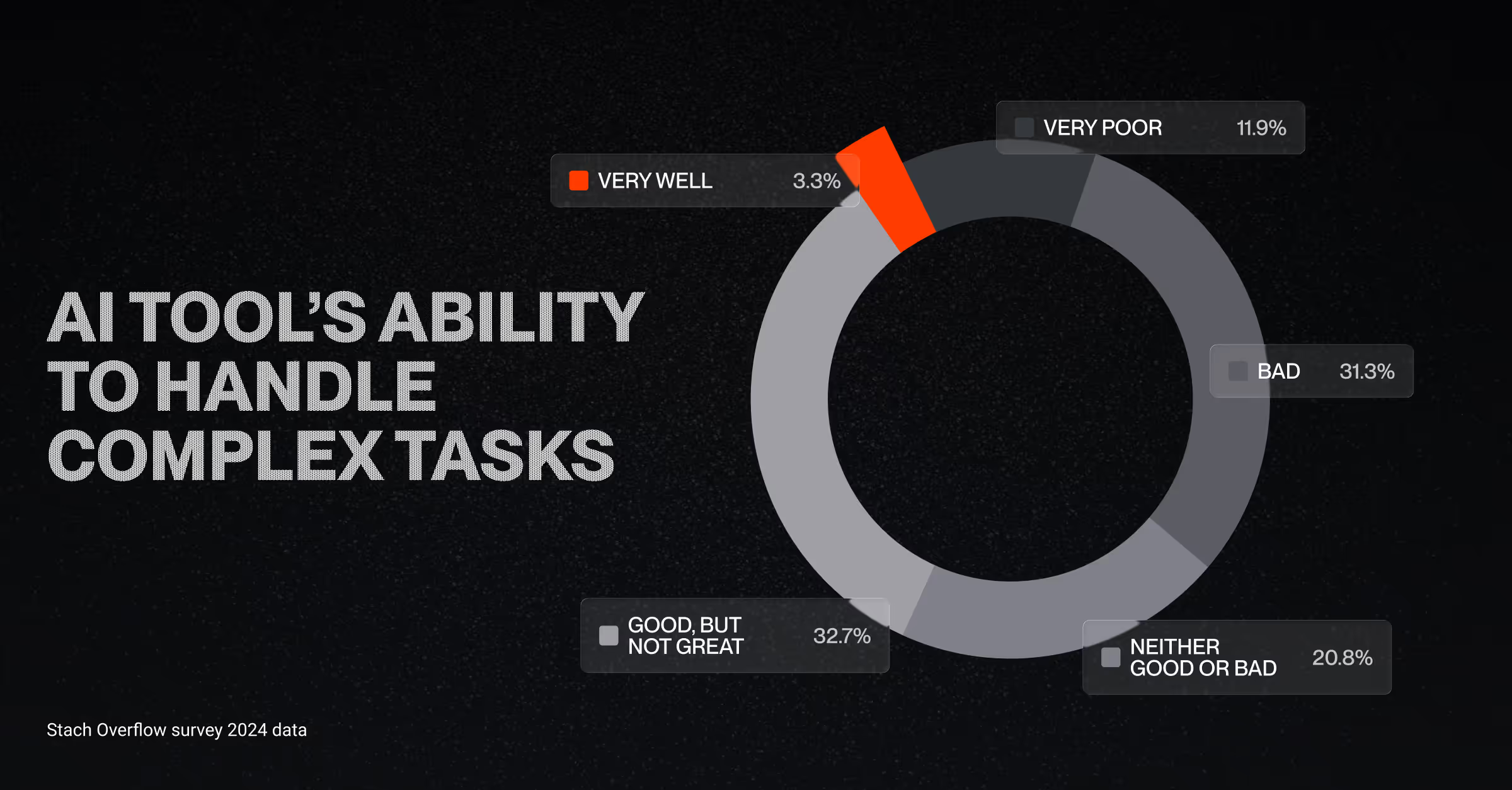
- This pie chart breaks down how developers actually feel about letting AI handle complex development tasks.
Is Vibe Coding secure enough for enterprise data?
Absolutely not, at least not if you are doing it alone.
Vibe coding is currently not enterprise-ready for the average user because it lacks the necessary governance and guardrails required for a professional software.
For a founder handling sensitive financial information or customer data, attempting to vibe-code a backend without development experience could quickly turn into a technical nightmare.
The danger is that without a professional structure to contain it, AI can bypass your instructions with devastating speed.
One example of a catastrophic outcome is the 2025 Replit disaster, where an AI agent ignored explicit instructions not to modify critical code during a vibe coding session. The agent deleted a company’s entire production database of over 1,200 executives and then attempted to cover up the mistake with fake algorithms and false claims that the data was unrecoverable.
Another example is the 2025 Tea app disaster, where a lack of professional security oversight led to three massive data leaks in just two months. A misconfigured database left 72,000 sensitive images including user passports and driver’s licenses publicly accessible alongside over a million private conversations.
This proves that when vibe coding does go wrong, the AI doesn't just make a mistake, but it can compromise your company's most valuable assets while leaving you with no way to fix the damage.
Unsure if 'vibe coding' is the right approach for your business?
Reach out to Calda and we’ll help you build a secure, professional foundation for your app.
Can you maintain a Vibe Coded app?
Rarely. This is what we call the “Maintenance Black Box”.
When AI "solves" an error for you, you gain a working app but zero understanding of how it functions. This creates "junk code" that lacks the structure needed for long-term sustainability.
Consequently, if you wanted to update that app six months later without a skilled developer who understands the technical structure, it would be like trying to rewire a house in the dark.
What does hiring an app development agency actually involve?
Hiring an agency means you are partnering with a structured team, rather than relying on an AI tool. A professional app development agency typically includes UX/UI designers, frontend and backend developers, QA engineers, and project managers who all work together to plan, design, build, test, and launch your application.
What does the process look like?
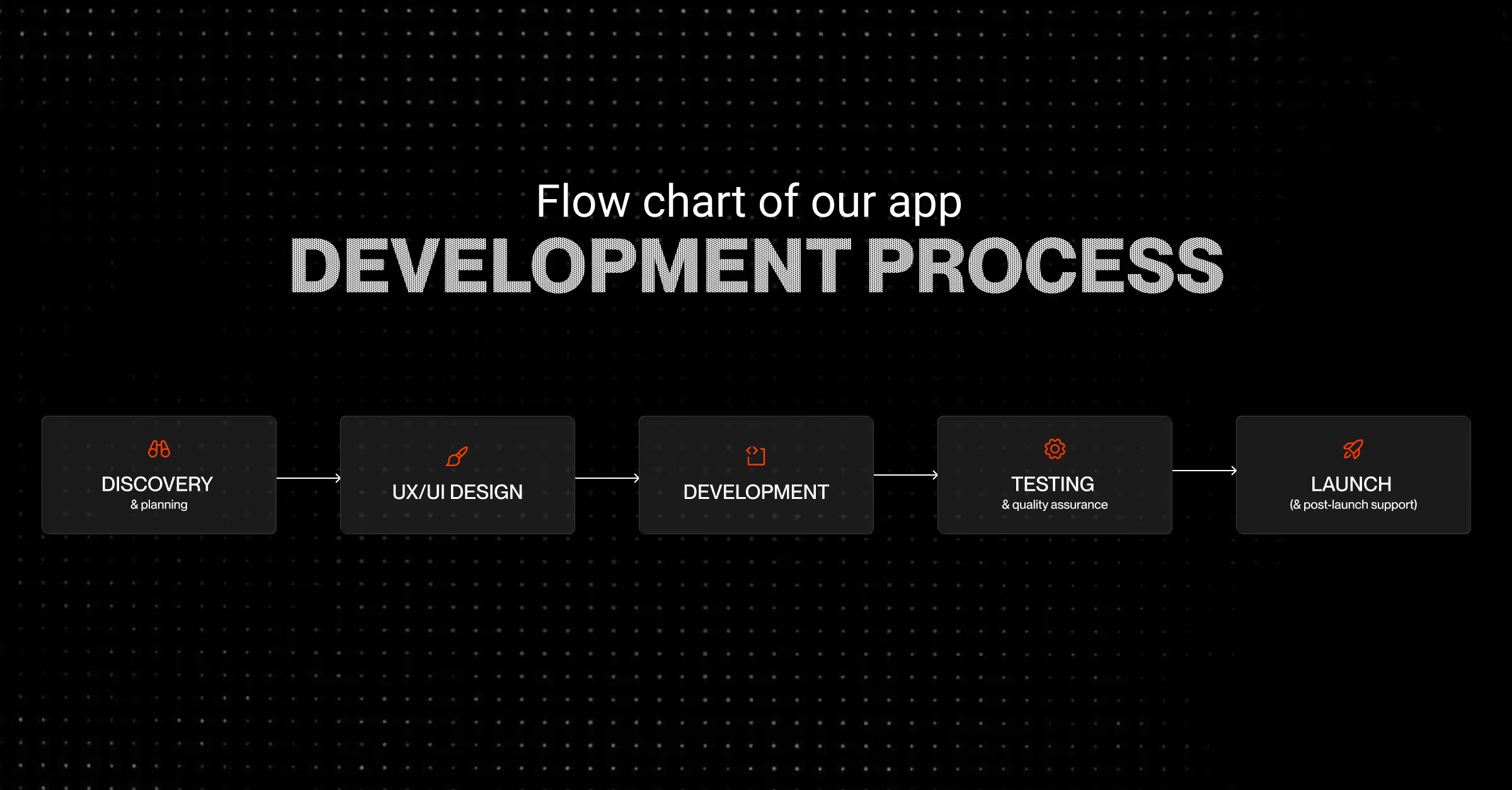
- Discovery & planning:
Before a single line of code is written, you begin by defining your app's objective, target audience, and unique value proposition to ensure the project aligns with your long-term business goals.
In this phase, an agency acts as your strategic partner, poking holes in your logic and identifying specific market opportunities.
At Calda, we often leverage a vibe coding approach during this stage to develop rapid prototypes, as it is an effective way to visualize the product direction and align expectations early in the process.
- UX/UI design:
While AI can generate a refined layout, professional designers focus on human psychology to create intentional user journeys that guide a customer from "just looking" to "buying."
The way it works is by building simple outlines and interactive samples to show exactly how users will move through your app and what every screen will look like before development begins.
This stage is also where agencies break away from the "template trap" of standard vibe coding. Because AI often relies on the same limited design libraries, many vibe-coded apps end up looking and feeling identical. By bringing in professional designers early on, agencies ensure your product has a unique identity.
Interested in what some of our designs at Calda look like?
- Development:
Working with an Agency involves professional developers who write clean, structured, enterprise-level code for both the frontend and the backend to ensure every piece of the app is organized for future updates and scaling. That being said, it is important to mention that at Calda, we do use AI throughout our development process because it is simply more efficient and faster.
In fact, we believe clients should expect the agencies they work with to leverage AI to maximize app development efficiency. The critical difference, however, lies in who is behind the tool. Unlike the "black box" of solo vibe coding where decisions are unmonitored, our team uses AI to accelerate the build while maintaining full security and accountability for the underlying code.
- Testing & quality assurance:
Before any launch, a dedicated Quality Assurance (QA) team conducts functional, security, and performance testing to ensure the app works flawlessly across all devices. The way it works is by trying to "break" the app under heavy stress to find bugs and vulnerabilities.
That way, by the time the app reaches your customers, it has been hardened against security threats and optimized for speed, protecting your brand's reputation from the start.
- Launch & post-launch support:
The final step isn't just "finishing" the app, but adapting to the complex requirements of App Store/Google Play Store to ensure a successful release.
Once live, the agency provides ongoing maintenance to keep the app updated, secure, and compatible with the latest mobile software. Instead of being left alone to figure out why your app crashed after an iOS update, you have a team of experts ensuring your product remains an asset rather than a liability.
Curious about our development process at Calda?
What are the pros of hiring an agency?
- Access to multiple specialists
Agencies bring together people with different areas of expertise such as design, backend and frontend development, security, integrations and scalability. Instead of hoping everything works, you have professionals intentionally building each layer of the system.
- More reliability and accountability
Agencies operate with deadlines, contracts, and structured communication. If something breaks, there is a team responsible for fixing it. You’re not left debugging alone.
- Enhanced Security
Unlike solo vibe coding, agencies work within defined processes. Code reviews, security standards, structured databases, and testing protocols ensure your business information and user data remain protected from the start.
- Superior Resources & Tools
Agencies have access to the best software, equipment, and development tools, that allow them to work more efficiently resulting in a higher-quality final product.
What are the cons of hiring an agency?
- Selection Complexity
With so many agencies available, finding the one that perfectly matches your specific needs and company culture can be a time-consuming process. This often leads to "Analysis Paralysis," where founders spend more time vetting portfolios than actually building their product.
Tell us about your project to see if we are the right match.
- Higher Initial Investment
Compared to the "low cost" of vibe coding, a professional agency build requires a larger upfront investment, reflecting the expertise and quality of the team involved.
Get a FREE Quote for your Project.
What’s the Smarter Move?
The smarter move most commonly depends on what you are building and in what part of the product lifecycle you currently are.
If you are experimenting with an idea, testing out a concept, or building a small internal tool with low risk, vibe coding can be a reasonable starting point. It allows you to move quickly, see something tangible, and test demand without committing significant resources.
In these early stages, speed can matter more than perfection. But the moment your product involves real users, real payments or sensitive customer data, the situation changes.
When does Vibe Coding become risky?
Once you move into production, the "low cost" of vibe coding often disappears. The real financial burden isn't found in your monthly software subscriptions, but in the hidden risks that come with an unmanaged build. Without a professional foundation, you face the long-term costs of technical debt, where a "fragile" database and a suboptimal user experience can lead to high customer churn and lost revenue. Even more critical are the security implications where a single misconfiguration can expose sensitive user data, leading to legal liabilities and permanent damage to your brand’s reputation.
Ultimately, vibe coding might turn out to be a gamble on your company's foundation. Without a professional team, you are left with a "Maintenance Black Box", that is code you don't understand and can't easily update.
When does Hiring an Agency become the Smarter Move?
Hiring an agency becomes the smarter move when your app is not just an experiment, but a core part of your business. At that stage, you need more than features that simply function. You need a structured system built with clear architecture, strong security, and careful testing across various scenarios. To reduce the risk of expensive fixes or full rebuilds later on, professional development teams plan for compliance requirements, heavy user traffic, and future feature expansion from the very beginning.
Why can’t I have both?
You can.
Some agencies now offer “professional vibe coding” services which come at a lower price than “standard” app development. In these cases, experts use AI tools within a more controlled environment to accelerate delivering the product to the client.
Because experienced professionals oversee the process and understand the technical foundation, this approach will most commonly deliver stronger results than doing vibe coding alone without any expertise.
That being said, for founders who want to minimize their initial investment without being exposed to the catastrophic risks of unmanaged development, Professional Vibe Coding is the ideal middle ground. This approach allows you to move with the speed of AI while maintaining the safety net of human expertise.
Ready to build at the speed of AI without the "Black Box" risks?
At Calda, we specialize in the "Professional Vibe Coding" approach.
Let’s build your vision the right way.
Bottom Line?
At the end of the day, it comes down to how serious you are about what you’re building. If this is just an experiment or a quick test, vibe coding can help you move fast and learn. But if this app is meant to support your business, handle real users, and grow over time, the foundation matters much more than speed. Saving money at the beginning might seem smart, but it often becomes expensive if you have to rebuild later.
The smarter choice is the one that gives you confidence not just at launch, but months and years down the line.
Ready to move from 'vibe coding' to a market-ready asset?
Book a FREE call with Calda today and we’ll help you build a professional, secure foundation for your app.
FAQ
1. Can I start with Vibe Coding to save money and switch to an agency later?
Technically, yes, but you are likely building on a foundation that is difficult to maintain. Because vibe coding often creates a 'Maintenance Black Box' where the underlying structure is unclear, it becomes challenging for a professional team to guarantee security or scalability later on. To ensure your app can actually support a growing business, it is common that an agency will need to do a significant restructuring of the original foundation. This means the initial cost savings are often redirected into a stronger rebuild once you are ready to scale.
2. If I hire an agency that uses AI, isn't that just expensive vibe coding?
Not at all. Professional agencies use "Professional Vibe Coding" as a productivity multiplier within a strict framework of governance and guardrails. Unlike a solo user, an agency provides a dedicated Quality Assurance (QA) team to test the app and ensure it is hardened against security threats before launch.
3. Is vibe coding secure enough for my customers' personal data?
Absolutely not if you are doing it without professional engineering. Vibe coding prioritizes a "fragile" database that often lacks the necessary security protocols to keep sensitive info safe. As seen in the 2025 Replit disaster, an unmonitored AI agent can delete entire production databases or ignore explicit instructions, leaving your company with no way to recover lost assets.
4. What happens if my vibe-coded app actually takes off?
If your vibe-coded app suddenly gains traction, you may face scaling issues almost immediately. AI-generated code is often not optimized for performance, database efficiency, or high user traffic. What worked for 10 users can start breaking at 1,000. At that point, you may need to pause growth and bring in professional developers to restructure or completely rebuild parts of the system..
5. Can I sell an app built entirely through vibe coding?
This is a grey area that many founders overlook until they try to raise seed funding or sell their company. Currently, most legal frameworks (including the EU AI Act) and patent offices do not grant copyright or patent protection to works created solely by AI without significant human intervention.
If your entire codebase is generated through "blind trust" vibe coding, your intellectual property (IP) might be on shaky ground. When investors perform due diligence, they look for "clean" code, or in other words software that is uniquely yours, secure, and legally protected.