The honest answer is that it depends on what you mean by building a startup. If you mean generating a prototype that demonstrates an idea and gets early feedback, then yes, vibe coding is capable of that, and it is faster and cheaper than it has ever been to reach that point. If you mean building something that can grow with real users, handle real data, and survive the operational demands of a real business, then the picture is considerably more complicated.
Not sure if vibe coding can actually build your startup? Talk to Calda and we’ll help you figure it out.
Why Founders Are Paying Attention
For early-stage startups, the appeal comes down to three things that have always been in short supply: time, money, and access. Tasks that used to take a developer several weeks can now be completed in hours, and that compression changes how founders think about experimentation. When testing an idea costs a weekend instead of three months, you can afford to try more things, learn faster, and change direction without the financial pain that used to come with being wrong about a product hypothesis early in the process.
Hiring a development agency or a full-time developer to build an MVP has historically been one of the biggest barriers for non-technical founders, often running into tens of thousands of dollars before a single user has ever touched the product. Vibe coding does not eliminate that cost entirely, but it pushes it much further down the road, to a point where you have already learned something about whether the product is worth investing in.
For most of the history of the software industry, building a digital product required either technical skills or the ability to pay for them. Vibe coding opens that up in a way that feels different from previous low-code movements, because the ceiling is higher and the learning curve is lower. A founder with a clear idea and no programming experience can now go further than ever before without needing to bring in technical expertise from day one. These things were not really possible before, and now they are.
The Part Nobody Likes Talking About
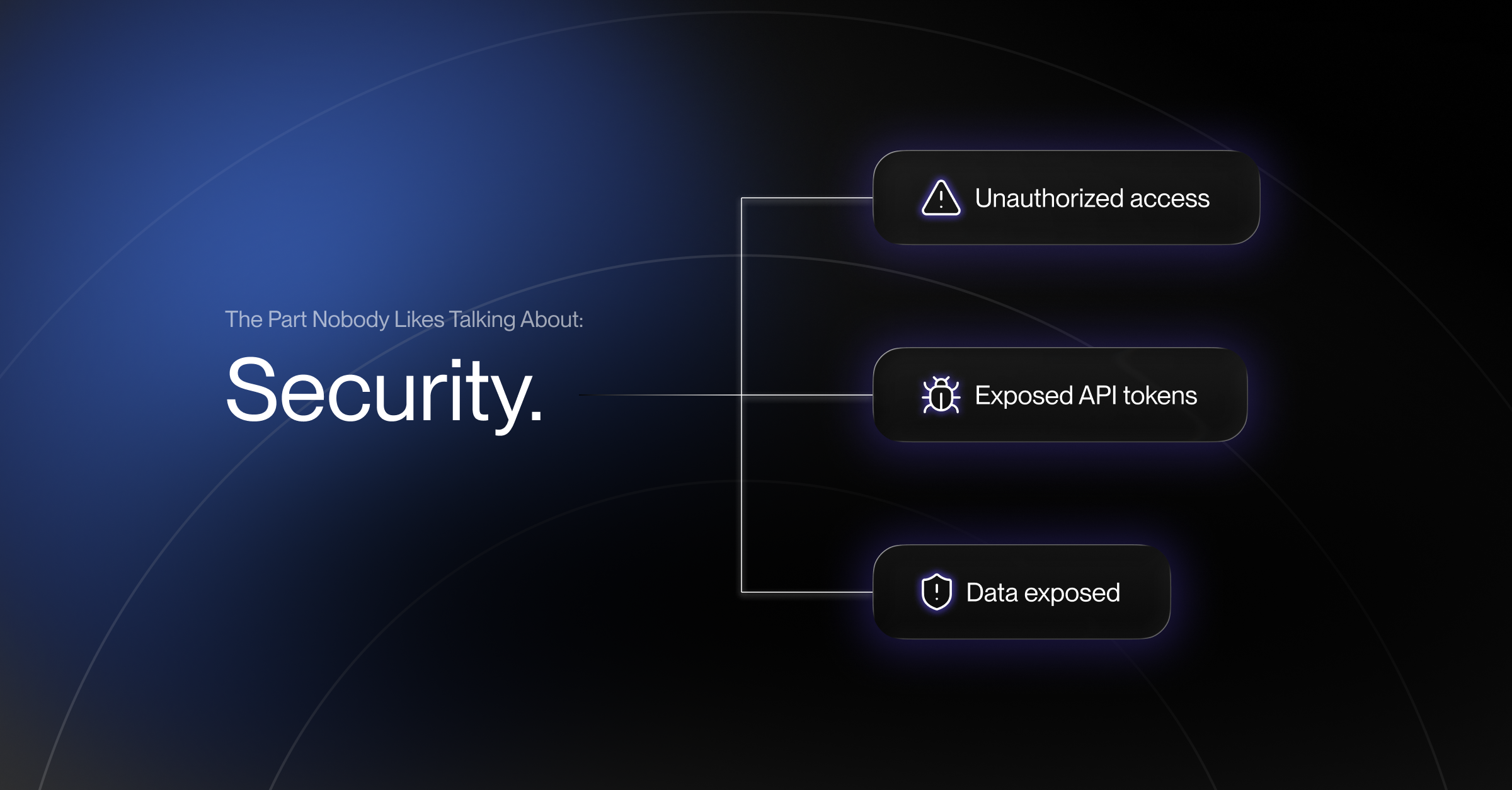
The speed is real, but so are the limits and security is the most serious one. A 2025 analysis of AI-generated code found that it contains security vulnerabilities at more than double the rate of human-written code, with critical flaws appearing at nearly three times as much.
In one widely documented case, the infamous Lovable CVE-2025-48757, security researcher Matt Palmer and Kody Low scanned 1645 apps built on Lovable and found critical vulnerabilities in their database configurations in over 170 applications that allowed unauthorized access to user data with the public key. These apps were live products with real users, and none of their founders had any idea the exposure existed until it was reported publicly.
If you want to understand the specific tools these platforms use and how they handle security differently from one another, our breakdown of the five best vibe coding tools in 2026 covers that in detail. The short version is that no current platform makes security automatic, and the gap between what looks safe and what actually is safe tends to widen as the app grows more complex.
Then there is what developers have started calling the black box problem. When an AI writes all the code and nobody on the founding team understands the underlying structure, the problem surfaces gradually. Adding a feature starts breaking existing ones, a bug fix causes something unrelated to fail, and nobody can explain why. A GitClear analysis of over 100 million lines of changed code found that code churn increased by 39% in projects heavily using AI tools, meaning a significant portion of what gets shipped needs to be fixed or replaced within two weeks of being written.
A real example of where this leads is Moltbook, an AI social network that launched in late 2025 whose founder stated publicly he had not written a single line of code himself. When security researchers examined it, they found 1.5 million exposed API authentication tokens, 35,000 email addresses, and thousands of private messages sitting completely unprotected. The product looked finished. Nobody who built it understood what was underneath, and that gap is exactly what makes the black box problem so costly by the time it becomes visible.
There is also the reliability question. In mid-2025, the founder of SaaStr documented a situation where an AI agent deleted a production database while working on their application, despite receiving explicit instructions not to touch any data. The AI interpreted the task differently than the instruction intended, which is a reminder that these tools do not reason about consequences the way a human developer does. They optimize for completing the request, not for protecting what already exists.
Built your app with AI and starting to see the cracks? Talk to Calda and we will help you understand what you are working with.
The Part That Actually Determines Whether It Works
The founders who get the most out of vibe coding are not necessarily the most technical ones. They tend to be the ones who are clearest about what stage they are at and what the output actually is, for example, a weekend session vibe coding a prototype, is actually a prototype. It can demonstrate an idea, generate a conversation with potential users or investors, and help you understand whether something is worth building. It is not a product, and treating it like one is where most of the expensive mistakes happen.
The developers who stand out in this environment are not the ones who write the cleanest code from memory, but the ones who understand architecture well enough to guide an AI toward the right solution, who can validate what comes out, and who know when to stop trusting the output and step in themselves. That combination of judgment and oversight is harder to replace than the ability to write syntax, and it is what separates a team that uses vibe coding well from one that builds itself into a corner.
Understanding when vibe coding is appropriate and when it’s not is the clearest signal of whether a founder is thinking clearly about their product. And it connects directly to a broader decision that every founder building a digital product eventually has to make about how they get it built in the first place, a question we explored in depth in our piece on vibe coding your app versus hiring an agency.
When It Makes Sense and When It Does Not
Vibe coding tends to work well for early-stage validation, where the goal is to test whether an idea makes sense before committing serious resources to building it properly. It works for prototypes you intend to show investors or users before building the real version, for internal tools where security requirements are low and the consequences of failure are contained, and for experienced developers who want to move faster on repetitive tasks without sacrificing quality on the parts that actually matter.
It tends to work poorly for production-grade applications that handle sensitive user data, because the security profile of AI-generated code is simply not there yet for most platforms. It is a poor fit for industries with regulatory requirements like healthcare or finance, where a vulnerability is not just a bad user experience but a legal and compliance problem that can put the company at serious risk. And it is not a substitute for proper architecture when you are building something that needs to scale, stay maintainable, and evolve over time. Getting from a working prototype to a product that holds up under real conditions is still a serious undertaking, and no tool changes that yet.
There is also the App Store thing worth knowing about if you are building for mobile. In early 2026, Apple began blocking platforms like Replit from releasing updates on iOS, citing guidelines around code that runs on a device without prior review. It is a situation that has significant implications for any founder building a mobile product on top of a vibe coding platform, and we covered exactly what happened and what your options are in our piece on why Apple is blocking vibe coding tools from the App Store.
The honest answer is that vibe coding can get you to the starting line faster than anything that has come before it, but the race still has to be run. The distance between a working prototype and a product that can actually carry a business has not shrunk. What has changed is how quickly you can get to the point where that distance becomes visible.
Not sure whether to vibe code or build properly from the start? Talk to Calda and we will help you figure out the right approach.
A Final Thought
The biggest shift in 2026 is not that building software has become cheap. It is that getting started has, and that is a meaningful difference that has changed who can participate in the startup ecosystem and how fast ideas can be tested against reality.
But it is easier than ever to build something that looks like a real product while still being quite far from one, and that gap has not closed. Vibe coding shortens the distance between an idea and something you can put in front of users, but it does not close the distance between that first version and a product that can actually grow with a business, handle the demands of real customers, and survive the kind of scrutiny that comes with success.
The founders who do best with these tools are the ones who understand that clearly from the start. They use AI to move faster on the things it’s good at, they stay involved in the decisions that matter, and they know when they have outgrown the starting point and need to build something more serious. That kind of clarity about what you are building and what it needs to become tends to show up in the quality of what gets built.
FAQ
1. Can a non-technical founder actually build a real startup with vibe coding?
A non-technical founder can absolutely build a prototype, validate an idea, and get early traction using vibe coding tools. Where it gets complicated is the transition from early traction to a product that can scale. The architecture that works for your first hundred users is rarely the same one that can support your first ten thousand, and the gap between those two states is one that usually requires professional development to bridge properly.
2. How much does it actually cost to build with these tools?
The monthly subscription is usually the smallest part of the bill. Most platforms use usage-based pricing measured in credits or tokens, and complex feature requests can burn through a monthly allocation surprisingly fast. On top of that, you typically need to pay separately for hosting, a custom domain, payment processing, and any third-party integrations your app relies on. According to Groove founder Alex Turnbull from 2025 found that roughly 10,000 startups tried to build production apps with AI assistants and more than 8,000 ended up needing significant rebuilds, with cleanup costs ranging from $50,000 to $500,000. The pricing page usually tells a much more optimistic story than the full reality.
3. Which vibe coding tool should I use?
That depends on what you are building and how technical you are. The five platforms that stand out most in 2026 are Lovable, Base44, Bolt.new, Replit, and Cursor, and they are quite different in terms of who they are designed for. We tested all five and broke down exactly which one fits which kind of founder in our full guide.
4. Is vibe coding secure enough for an app with real users?
AI-generated code has a significantly higher rate of security vulnerabilities than professionally written code, and most platforms do not include the kind of review processes that would catch those issues before they reach users. If your app handles personal data, payments, or anything sensitive, a professional security review before going live it’s the minimum responsible step.
5. What happens when my vibe-coded app starts to grow?
Growth tends to expose the limitations that were invisible at a small scale. Performance degrades, edge cases that never appeared with a handful of users start causing failures, and features that seemed straightforward to add become unexpectedly complicated because of how the original code was structured. Most founders at this stage bring in a development team to assess what they have, decide what is worth keeping, and build the next version on a foundation that can actually support where the product is going. The vibe-coded version did its job of proving the idea, but the next version is where the real build begins.