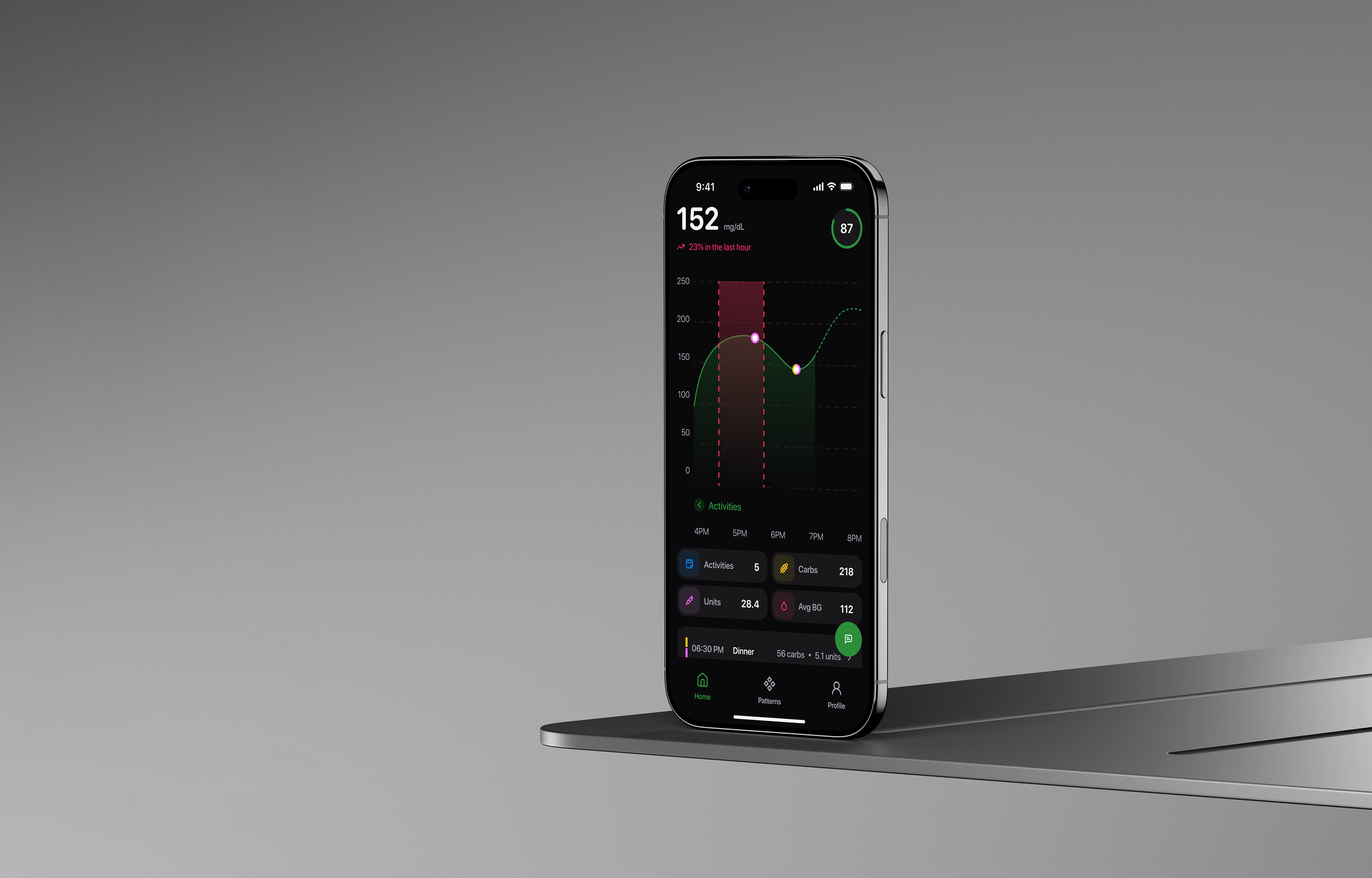
Managing Type 1 Diabetes generates a constant stream of data including glucose levels, insulin doses, meals, exercise, sleep and other daily factors, but understanding how those variables interact is far more difficult than collecting them. Subseven, a US-based health startup, wanted to offer a solution that would recongize hidden patterns in patient data and help them manage their day-to-day lives.
The initial work combined multiple sources of personal health data to identify relationships between everyday behavior and glucose response that were difficult to detect manually. An early pattern-recognition algorithm helped reduce A1C by 0.7 points within three months, demonstrating the potential of turning fragmented health data into actionable insight.
Subseven trusted Calda to build the product from scratch. The project was kicked off with an in-depth discovery phase, understanding how Type 1 Diabetes management actually works day to day and identifying where existing tools were falling short, before designing and engineering a product around those specific gaps. From there, we delivered Subseven end to end, with Claude integrated at nearly every stage of the build.
From Concept to Clickable Prototype in Hours with Claude Design
Designing Subseven meant defining, from the start, what a usable data experience should actually feel like. Three decisions shaped everything that followed:
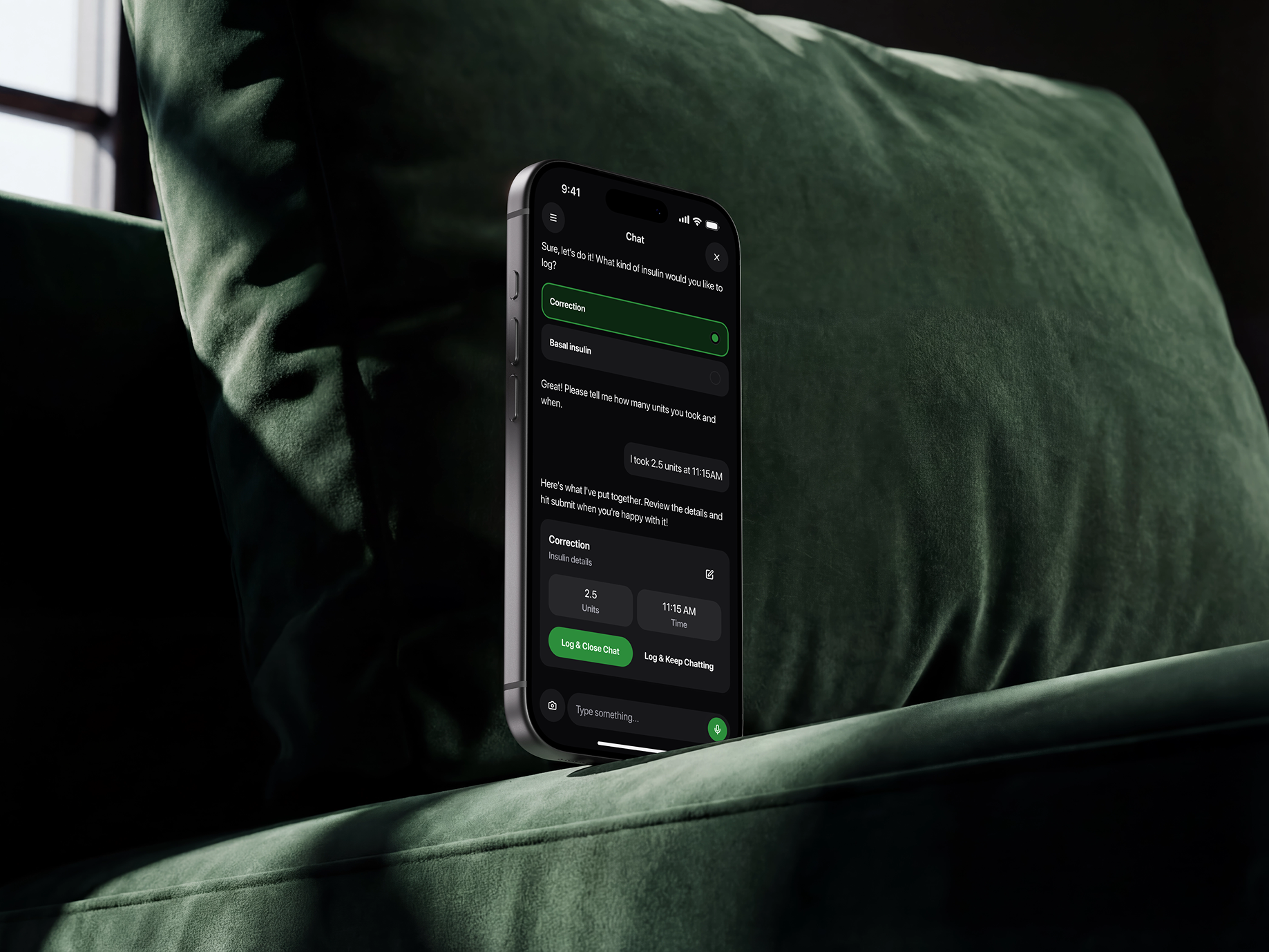
- A chat interface that replaced manual forms, so people could log a meal, a dose, or a workout in plain language instead of tapping through screens.
- A single daily score that surfaces the day's trend at a glance, before anyone has to dig into specifics.
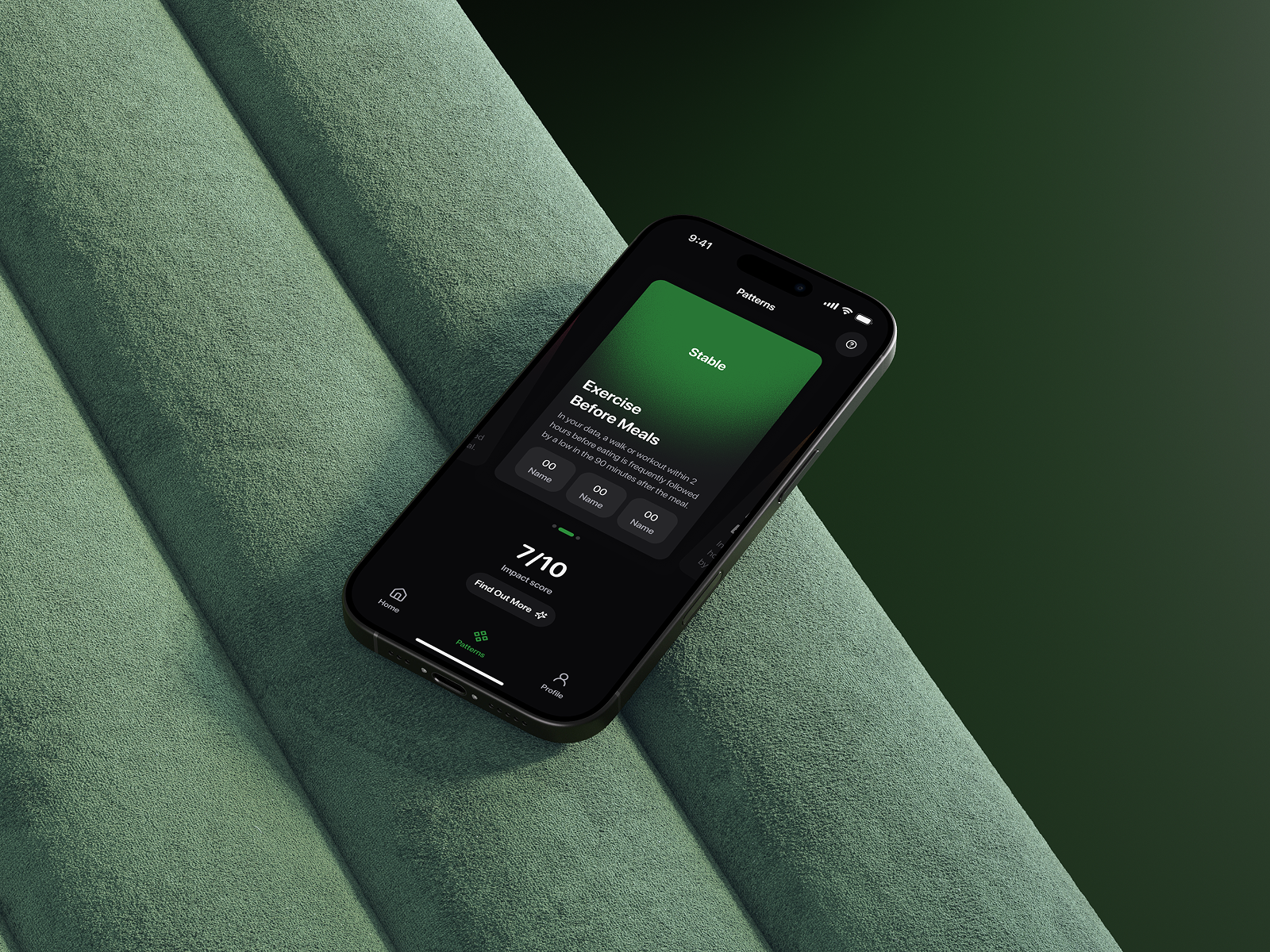
- Pattern cards that surface what actually matters, before the user has to go looking for it.
Using Design we sped up the design process - early concepts were translated into functional, clickable prototypes within hours instead of weeks, and that same workflow has remained in active use well beyond launch, enabling rapid validation of new product functionalities before they go into production.
This AI-enabled discovery approach allowed us to validate product decisions against a working prototype rather than relying on discussion alone, and to eliminate concepts that don't hold up before any engineering work begins.
From Prototype to Production with Claude Code
Once the design was settled, our engineering team moved into the build, using Claude Code to accelerate development across a complex technical stack, a conversational interface, real-time data pipelines synchronizing multiple third-party health APIs including Dexcom and Apple Health, the logic behind the daily score, and the pattern-recognition engine tying it all together.
That kind of acceleration is well documented, with Anthropic reporting engineering productivity gains of two to three times among companies building with Claude Code.
For a health application, what mattered most was whether that speed held up under scrutiny once the code shipped. Every component went through the same code review, testing, and QA process applied to any product handling insulin doses and glucose data, and it held up: production grade code, built quickly, without compromising on the rigor a health application requires. Even so, users never see that rigor, only the result, which is an interface simple enough to use without a second thought.
"Calda has built what we wanted. They always hit deadlines and deliver high-quality goods."
— Chris Putsch, CEO, Subseven
AI-Powered Engine with Claude API
Inside Subseven, a Claude-powered AI engine transforms everyday inputs, meals, workouts, insulin doses, and data synced from Dexcom and Apple Health, into actionable insight. This includes:
- Nutrition values calculated with the precision required for insulin dosing decisions.
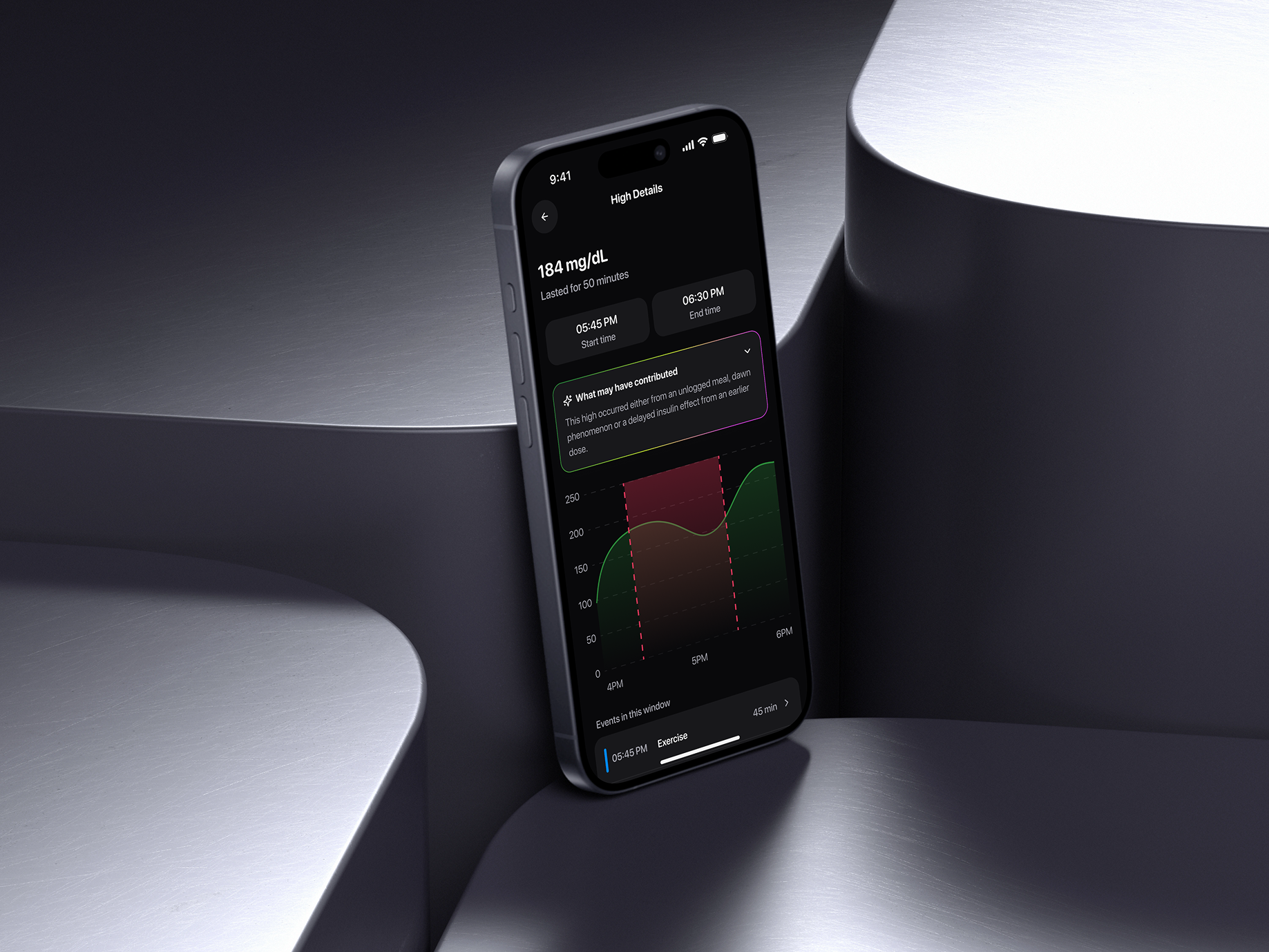
- Direct, data-backed answers to questions such as, which workout had the strongest impact on glucose levels the following morning.
- Behavioral and physiological patterns surfaced proactively, without requiring manual analysis.
These insights are designed to inform decisions, not make them. Subseven was never built to diagnose conditions or replace consultation with an endocrinologist. Instead, it translates fragmented data into actionable, everyday guidance that complements, rather than replaces, existing care.
Built to be trusted
For a product handling glucose readings and insulin doses, trust was designed into the architecture from the start rather than added after the fact. Personal data is never used or shared with external providers, while integrations with Dexcom and Apple Health require explicit user consent that can be withdrawn at any time. Sensitive data is protected through encryption, access controls, and continuous monitoring across the platform.
That same standard extends to the AI layer. Claude operates as a controlled processing component within the product rather than an external destination for user data. Only the context required for a specific interaction is passed to the model, with application-level controls determining what Claude can access and when. Anthropic treats commercial customer data as confidential and does not use it to train its underlying models by default. The result is an AI-enabled experience built around data minimization, controlled access, and clear separation between product data and model training. While most of this infrastructure remains invisible to the user, it forms a critical part of the trust required to work with information this sensitive.
Why it matters
Subseven's mission was never about the technology underneath it. It's about returning a few hours each week that would otherwise go toward guesswork, and giving people with Type 1 Diabetes greater confidence in the decisions they make every day. Claude was involved at nearly every stage of development, from the earliest conceptual work, to a meaningful share of the code that shipped, to the processing that continues to run in the background each time a user logs a meal or asks a question.
For us, the technology was never the point, it was what made the mission possible, helping people understand their own bodies a little better than they did the day before. Subseven is available now on the App Store and Google Play for anyone managing Type 1 Diabetes, or supporting someone who is.